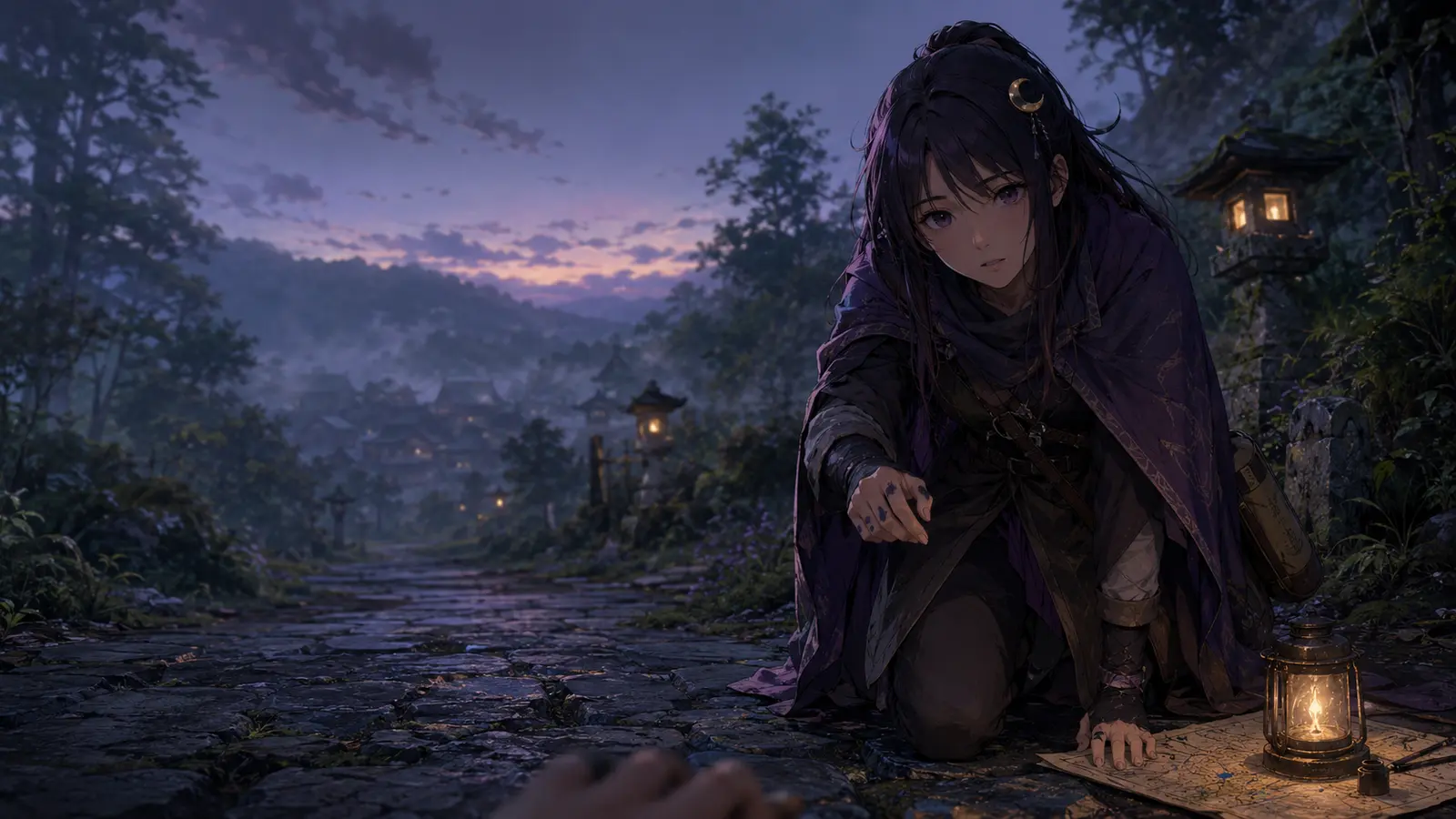
大丈夫?
The first voice
Cold stone presses against your cheek. Somewhere nearby, a bell rings. You remember a bus, rain ticking against the window, the sleepy sway of the road... and then nothing.
When you open your eyes, the world is wrong in several very specific ways. The road beneath you is paved with uneven stone. Timbered buildings lean over a narrow street. A cart rattles past with wooden wheels. No traffic lights. No power lines. No bus.
Footsteps hurry toward you. A young woman crouches beside you, dark hair tied back, traveling cloak dusty at the hem, a sword resting at her hip. Her face is concerned rather than threatening. That is encouraging.
She looks worried. One hand hovers near your shoulder as if she is deciding whether it is safe to move you. She says the same short phrase again, a little more slowly, and waits.
Learning idea: You do not need to understand every sound. You only need enough clues to form a sensible meaning.
What did you hear?
Don't decode the writing yet. Use the situation.
She looks genuinely concerned.
She's checking whether you were hurt.
You just woke up on the ground after something went wrong.
Her voice rises like a question and sounds worried.
You understood Japanese before translating it
大丈夫? can mean “Are you okay?” or “Are you alright?” here. You understood the idea first from the situation. Now we attach the sound to the written form.
This order matters. We are not asking you to decode every character before you are allowed to understand Japanese. You already understood something useful. The writing now gives that understanding a shape.
Kana and kanji are already here, but you do not need to memorize a chart before using Japanese. You will keep hearing these words until their sounds and shapes become familiar naturally.
What do you want to say?
Tap each response as many times as you like. Selecting one only lets you hear it and mark it. The story waits until you choose to continue.
This is exploration, not a trap. Listen to はい. Listen to いいえ. Switch back and forth. Notice how two tiny sounds can completely change what Murasaki thinks is happening.
The bus memory
For a heartbeat the strange street vanishes.
You remember the bus hitting a pothole hard enough to shake everyone in their seats. A passenger beside you grabbed the rail, looked at you, and asked the same thing:
The world changed. The Japanese didn't.
That is the connection we want you to keep. You may have learned 大丈夫? beside a sword-carrying stranger on a medieval street, but it belongs just as naturally on a bus, in a café, at work, or anywhere someone wants to know if you are okay.
Can the browser understand you?
Listen first, then try saying 大丈夫, はい, or いいえ. This is not a score. We simply show what Japanese speech recognition heard.
Speech recognition works best in Chromium-based browsers. If unavailable, listening and the rest of the lesson still work normally.
Three things are enough today
大丈夫? · はい · いいえ
Three pieces are enough. Hear them again. Say them if you want. Pack any you want to review later.
You are not trying to “finish Japanese.” You are building a small set of things you genuinely recognize. The next lesson will reuse what you already know instead of abandoning it.
Murasaki’s relieved smile lasts only a moment.
Her eyes drop to the inside of your wrist. She gently turns your hand toward the lantern light, then checks again as if the angle must be wrong.
Every traveler she has passed tonight bears a small road-mark there.
You do not.
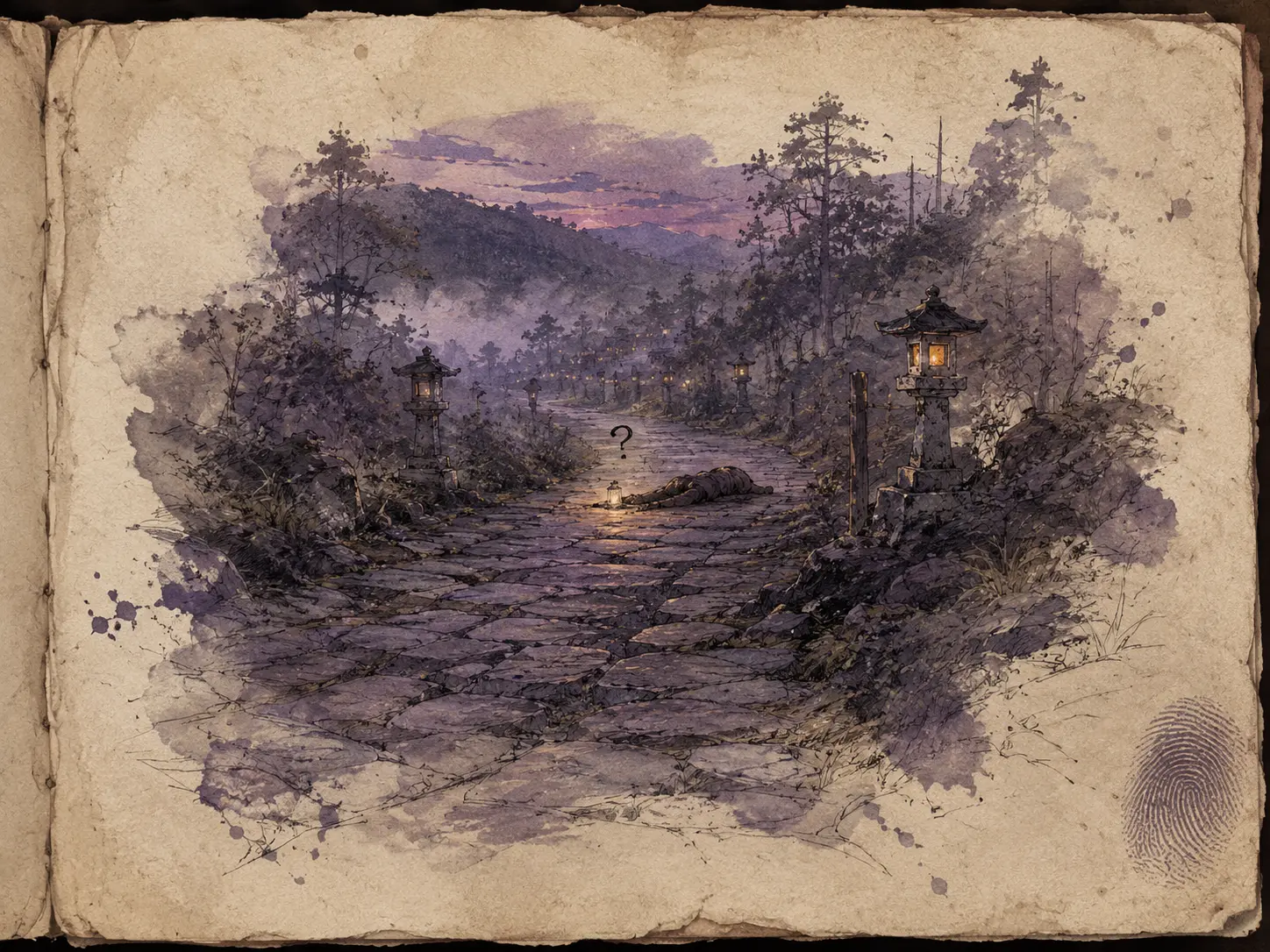
名前は?
Communication, somehow
Murasaki helps you sit on the low stone edge of a fountain. The street continues around you: merchants calling from stalls, armored travelers passing by, the smell of bread and woodsmoke drifting through the air.
You still have no idea where you are. Murasaki seems to realize that asking complicated questions would be pointless. Instead, she tries something wonderfully simple.
She points to herself.
Then she points to you.
She repeats the sequence once more: herself, her name, then you. No dictionary. No grammar lecture. Just a pattern you can observe.
She repeats her own name, points to herself, then points at you again.
What is she asking for?
You do not know every sound yet. Use the same four kinds of evidence before choosing.
Notice how much meaning can come from repetition and gesture. Language is not floating in empty space. People usually give you more clues than the words alone.
Murasaki looks curious and friendly, not alarmed.
She points to herself, says “Murasaki,” then points to you.
You have just met. She still does not know who you are.
She repeats the same short question after saying her own name.
名前 · name
For now, treat です as a polite sentence ending you will hear constantly. We do not need a grammar lecture yet.
Likewise, you do not need to master every possible way to introduce yourself today. The useful goal is simpler: hear a question about your name, recognize what is happening, and give an answer that works.
How do you answer?
Murasaki asks again:
These are all understandable. Explore how each sounds before deciding what your protagonist says.
Listen for what changes and what stays the same. The longer answer gives more information. The shorter answers rely more heavily on the situation. Japanese often lets context do useful work.
Names happen everywhere
Picture meeting someone at work, at a café, in a hotel, or at a game table. The fantasy situation is strange. Asking and giving names is not.
The exact phrasing may change depending on politeness and situation, but the core idea travels with you: recognize 名前, understand that a name is being asked for, and respond.
Later we will add fuller and more natural self-introductions. Today, being understood is enough.
Say your name
Hear the phrase, then try it aloud. Use any name you like. The browser will show what it heard rather than giving you a pronunciation score.
The world got slightly less confusing
名前 · 私 · です
More importantly, you now know how to listen for a question about your name and give Murasaki an answer.
And notice what happened: Lesson 1 taught you to survive a tiny exchange. Lesson 2 let you start becoming a person in this world. The Japanese is already carrying the story forward.
Murasaki opens her map journal and writes your name carefully on a small road-label.
エイジ
A soot-black shape drops from the fountain roof.
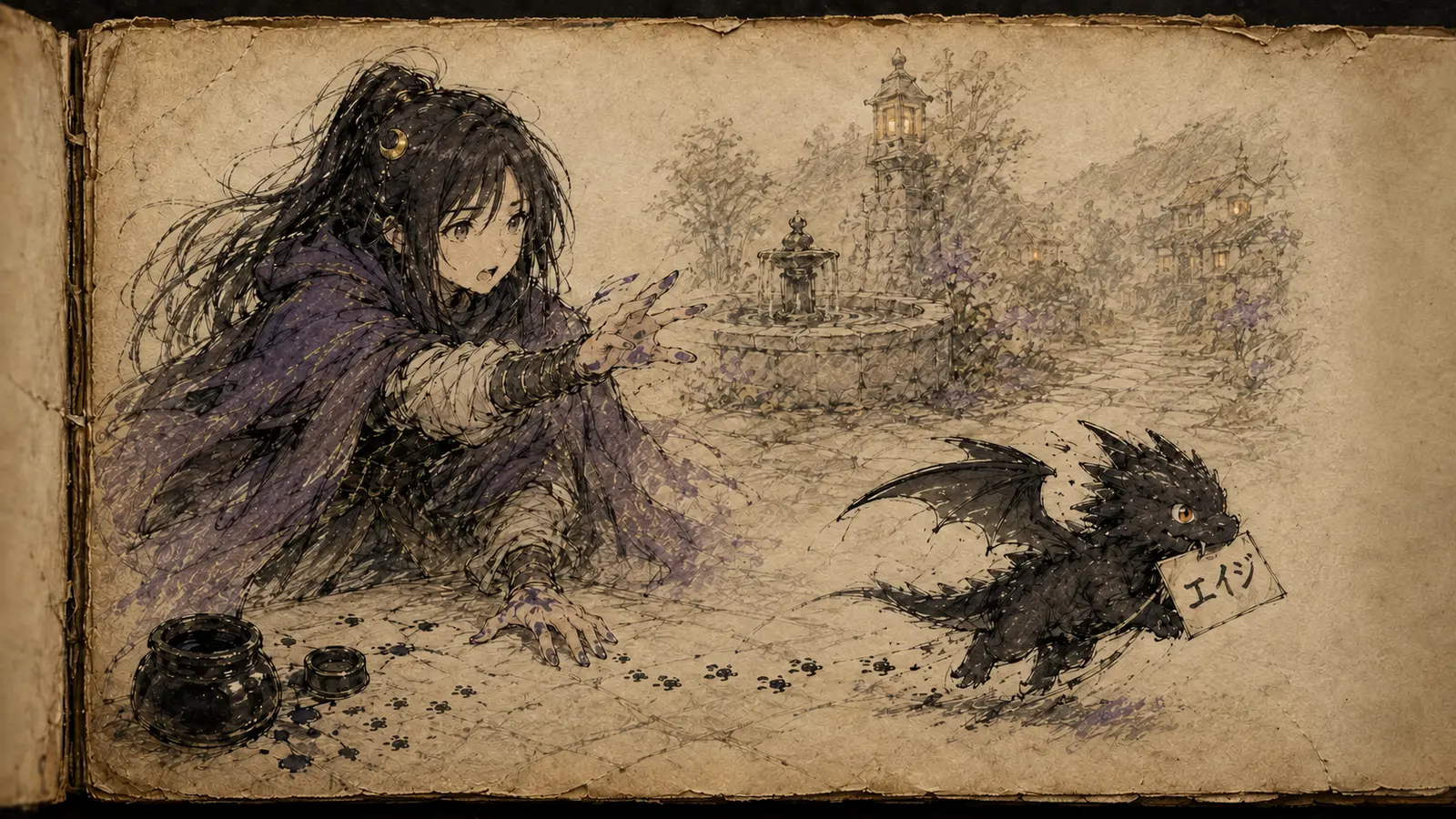
The tiny dragonling snatches the label in his teeth, lands in the spilled ink, and races away on four very guilty feet.
“スミ!” Murasaki shouts.
Sumi has stolen the only written copy of your name.
行きましょう
Someone has decided what happens next
Sumi is already halfway down the lantern road, your written name clenched between his teeth. Tiny black footprints stamp the stones behind him.
Murasaki lunges after the dragonling—and stops when a low clicking sound answers from the dark beyond the last houses.
Shapes move between the trees. Too many legs. Too many shining eyes.
Sumi darts toward the forest road. Murasaki points after him, then beckons urgently for you to follow.
She takes two steps down the street, looks back over her shoulder, and beckons for you to follow.
Do not dissect the phrase yet. First, figure out what she wants.
What does Murasaki want you to do?
Hear the phrase again and let the scene do some of the work.
She looks relaxed and expectant, not worried anymore.
She starts walking, looks back, and motions for you to follow.
Introductions are over, but you are still stranded in a place you do not understand.
Her voice sounds inviting, like she is suggesting the next thing to do together.
行きましょう · Let’s go
行きましょう is useful when someone suggests going somewhere together.
Keep it as one meaningful phrase for now. Later, after you have encountered similar Japanese naturally, we can look inside the pattern and see how it works.
What do you want to tell her?
Murasaki waits. You already know both responses. Listen to either one as often as you want before deciding.
The phrase travels with you
A friend stands up from a café table, picks up their bag, and says:
The fantasy world gave you the first memorable situation. The Japanese itself belongs anywhere.
Try inviting someone to go
Listen first. Then say the phrase as one unit rather than worrying about every character.
One new phrase. Two old answers.
行きましょう is the only new Japanese you need to carry from this lesson.
But はい and いいえ just became more useful. They are no longer “Lesson 1 words.” They are part of what you can do.
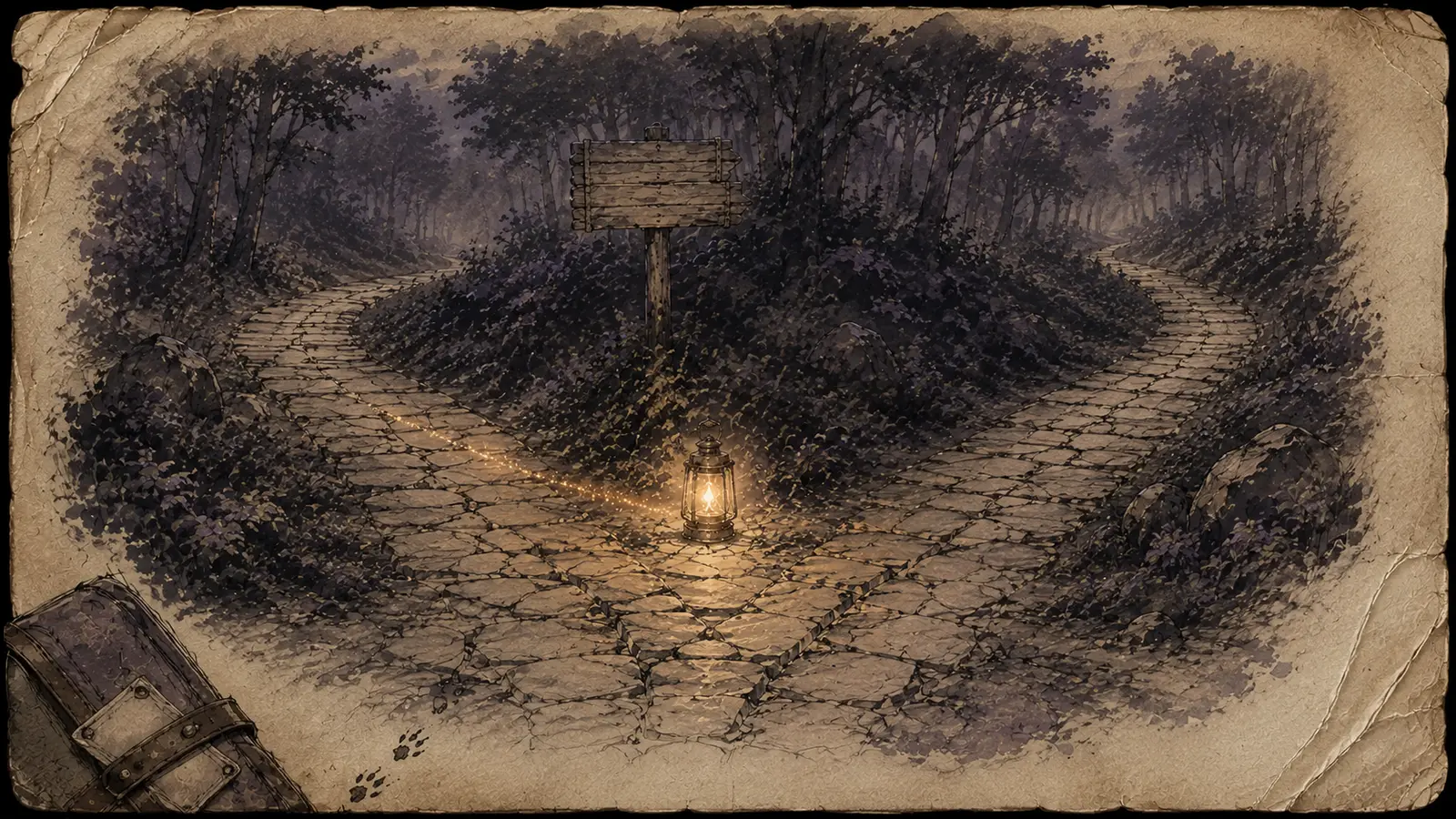
Sumi waits where the road divides beneath the trees.
He drops the damp name-label into your palm. Murasaki scoops him into her carrier before he can reconsider the return.
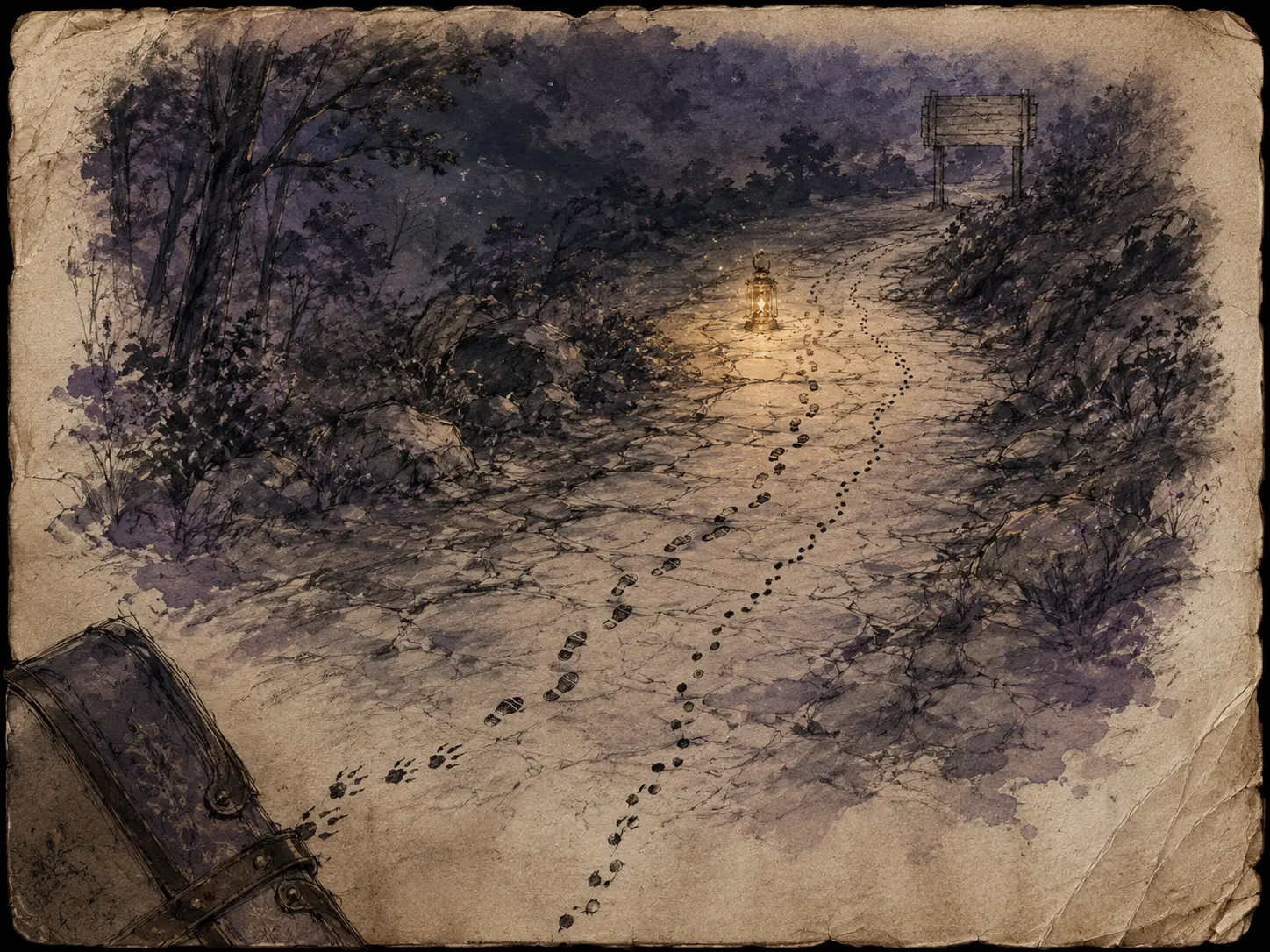
Then she raises the lantern toward the wooden sign above the fork.
The sign is not weathered. It is not broken.
Every name and direction has been erased.
どっち?
Two roads. No directions.
Your paper name-label is back in your hand, slightly damp and decorated with one tiny black footprint. Sumi watches from Murasaki’s carrier with the serene confidence of someone who believes returning stolen property deserves praise.
The road sign above the fork is perfectly blank. Murasaki opens her map journal, looks left, looks right, and turns the map upside down.
Nothing improves.
She points toward the road disappearing between dark cedars. Then she points toward the road climbing around the hill.
Her finger moves from one path to the other. She waits for you to choose.
You do not know the sound yet. The two roads and her gesture are enough to begin.
What is Murasaki asking?
She looks uncertain rather than frightened.
She points to one road, then the other.
The sign that should identify the routes is blank.
Her voice rises as she waits for a choice.
どっち? · Which one? / Which way?
どっち? is a casual question used when choosing between two things or directions. At this fork, “Which way?” is the natural English meaning.
Keep it as one useful question. You do not need a chart of direction words before you can ask for help choosing.
When the guide does not know
Murasaki tests the left road. The lantern dims. She tests the right road. It dims again.
Now she is the one who needs help. Use the same question she gave you.
It is not a complete navigation system. It is enough to make the problem shared instead of silent.
Two umbrellas by the door
A friend holds up two umbrellas—one blue and one clear—and asks:
The fantasy road made the question memorable. In everyday life, it works whenever two options are already clear from the situation.
Ask which one
Listen first, then let your voice rise naturally as a short question.
One small question opens two paths
どっち? is the only new Japanese you need today.
You recognized it from Murasaki’s gesture, then used it when neither of you knew the answer. That is communication—not vocabulary collection.
“どっち?” you ask.
Murasaki looks at you, then at the lantern resting between the two roads.
For one breath, nothing happens.
Then the flame bends toward the left-hand path and gives one faint pulse.
For the first time, the Lantern Road answers you.
準備中
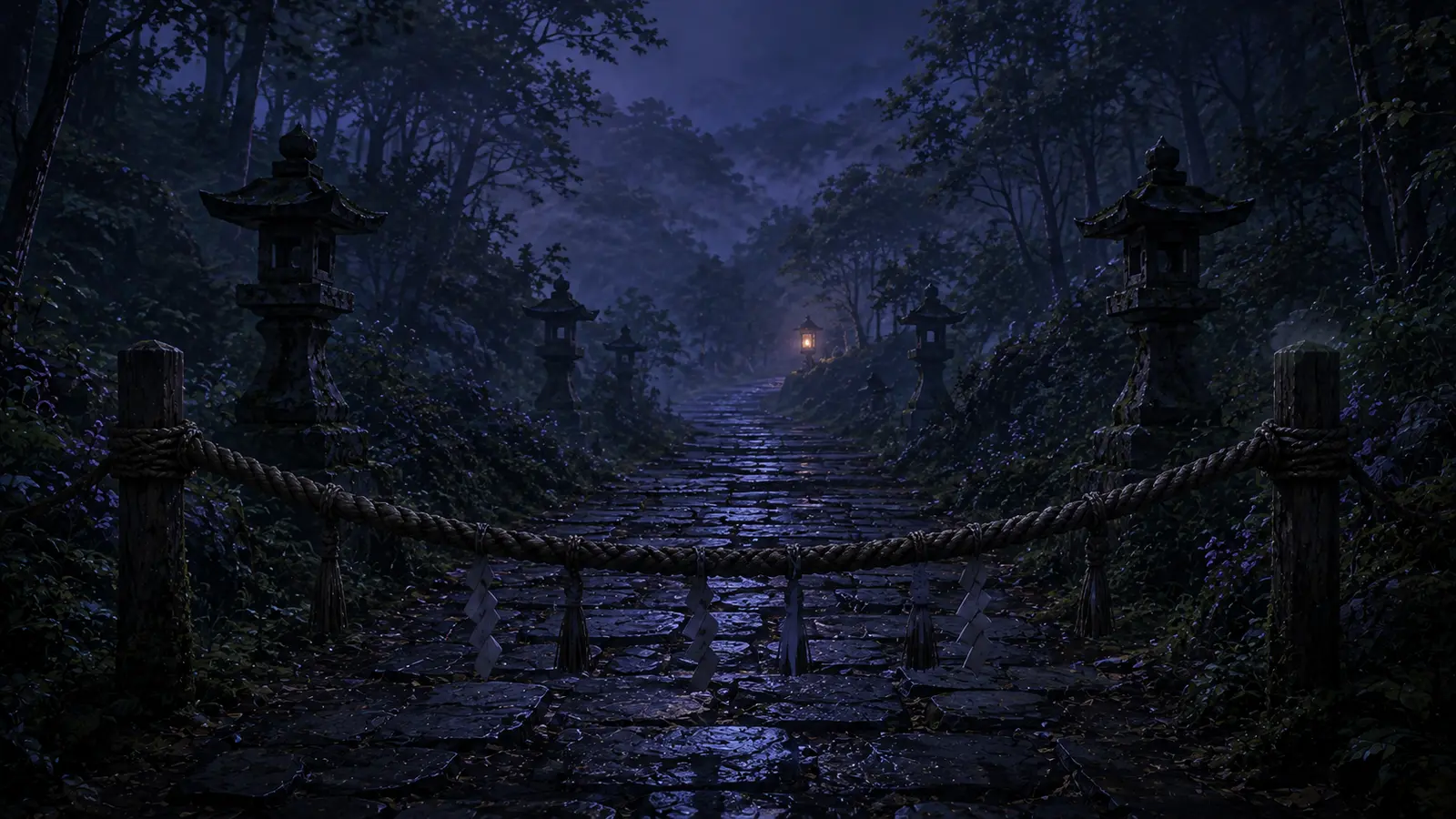
Lesson 5 is being built
準備中
This destination stays open so you can test the Lesson Wheel while the story grows.
Scaffolding questionable. Tiny dragon confident.
準備中
Lesson 6 is being built
準備中
This destination stays open so you can test the Lesson Wheel while the story grows.
Scaffolding questionable. Tiny dragon confident.
準備中
Lesson 7 is being built
準備中
This destination stays open so you can test the Lesson Wheel while the story grows.
Scaffolding questionable. Tiny dragon confident.
準備中
Lesson 8 is being built
準備中
This destination stays open so you can test the Lesson Wheel while the story grows.
Scaffolding questionable. Tiny dragon confident.